

As I start to write this on the morning of June 3, the Claude Status page looks like this:
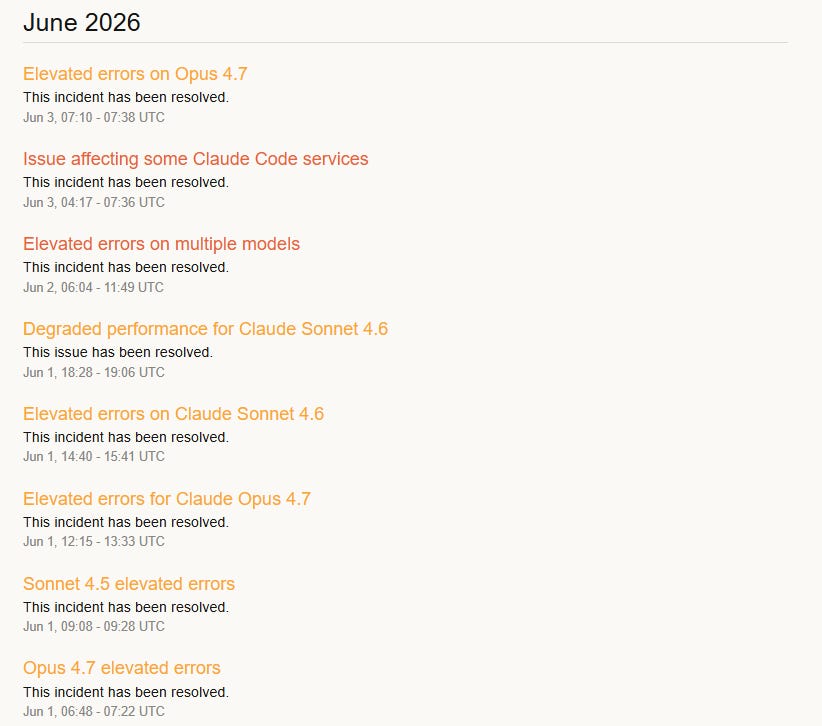
We’re just two-and-a-half days into June, with 8 “incidents” across multiple models.
As if that wasn’t enough, here’s some good ol’ Reddit bashing of the newest Opus 4.8:
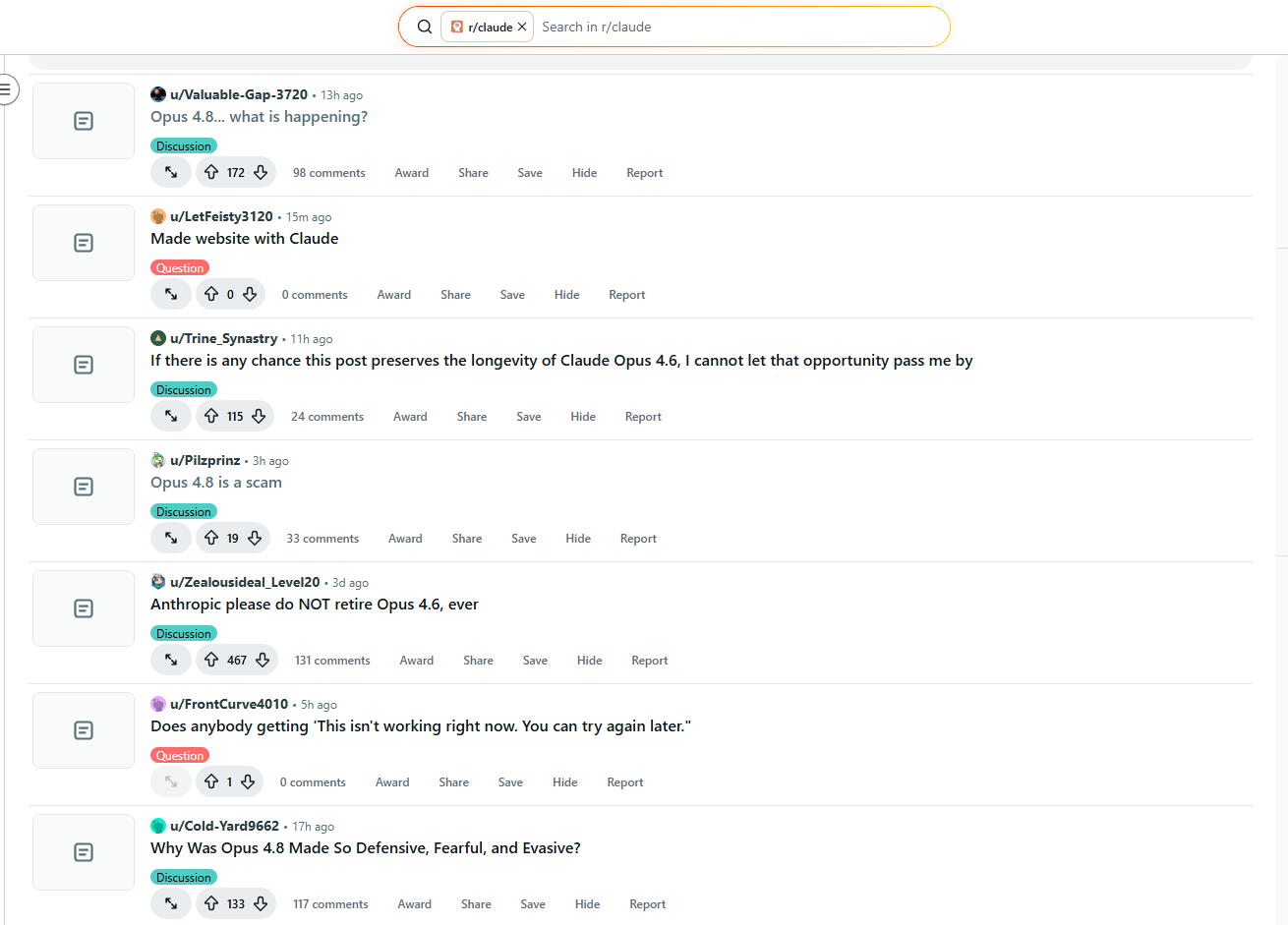
Just a few months ago, Anthropic was everyone’s darling.
What happened?
January-February 2026: “QuitGPT”
At the start of the year, Anthropic’s Claude Code product was riding a wave of mainstream popularity.
Even reluctant laggards like yours truly finally jumped on the bandwagon.
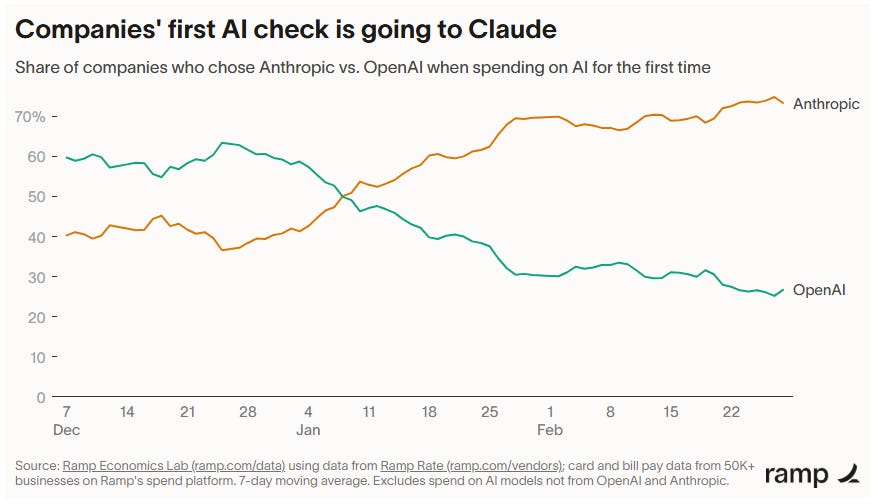
Businesses started picking Anthropic over OpenAI for their first-time AI spend:
Opus 4.6 came out in early February and soon became the first model to ever be #1 across three separate Arena leaderboards (code, text, and search) at the same time:


By most measures, Anthropic was already doing pretty damn well.
And then came QuitGPT.
After Anthropic refused to budge in the standoff with the US Government over the use of its AI models for mass surveillance and fully autonomous weapons, the administration designated Anthropic a “supply chain risk” to discourage third parties from conducting any business with the company:

Shortly after, employees at Google and OpenAI signed a “We Will Not Be Divided” open letter in support of Anthropic’s stance (1,000+ signatures as of now).
Shortlier afterer, OpenAI’s CEO Sam Altman posted this:

All. Shit. Broke. Loose.
OpenAI instantly became the main villain in everyone’s “Dario vs. Government” “David vs. Goliath” story: Here was Anthropic standing by its moral principles only for OpenAI to swoop in like a blood-starved vulture and bite a big chunk out of that juicy government contract’s flesh.1
This fueled the already ongoing QuitGPT movement.
People started fleeing from ChatGPT to Claude in droves.
Anthropic dropped an “Import Memory” feature that made it super easy for users to switch to Claude from “other AI providers” (wink wink, nudge nudge).
By early March, Claude was the #1 app on the US Apple App Store.
And Anthropic lived happily ever after.
No, wait…
March 2026: “Too big, too fast?”
The problem with having the most downloaded app on the App Store is that your app is downloaded by a whole lot of people.2
The problem with a whole lot of people trying to access your app at the same time is, well…

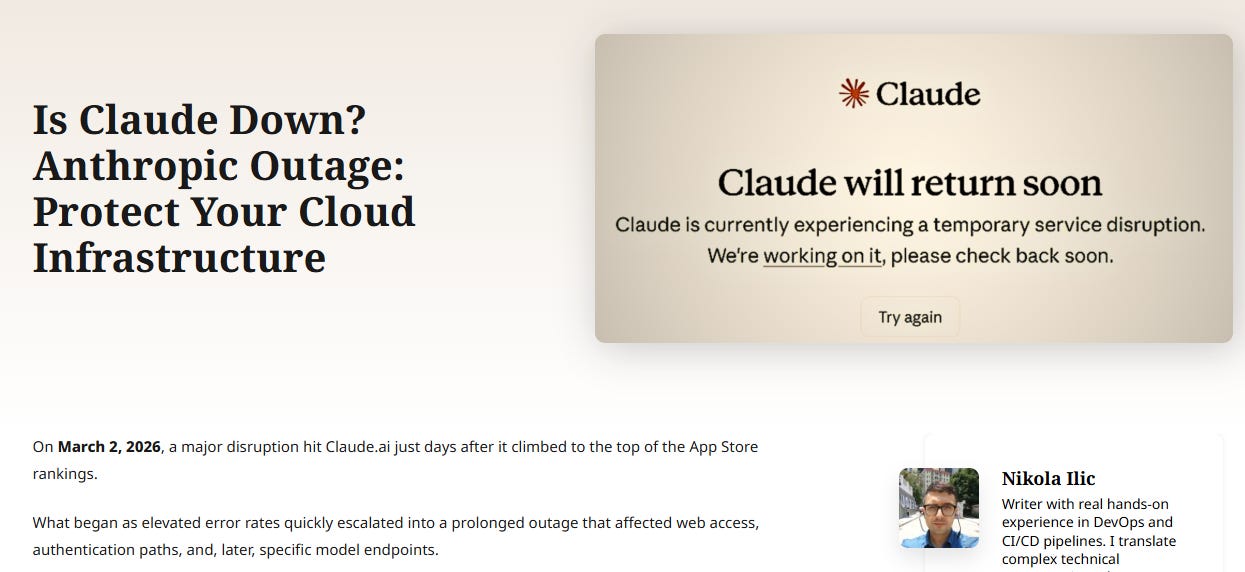

Yup.
On March 2, right after hitting that sweet #1 spot, Anthropic’s services couldn’t cope with the sudden influx of users and ran into compute constraints. (CEO Dario Amodei would later publicly acknowledge this.)
But hey, at least it was just one bad day, right?
Right?!
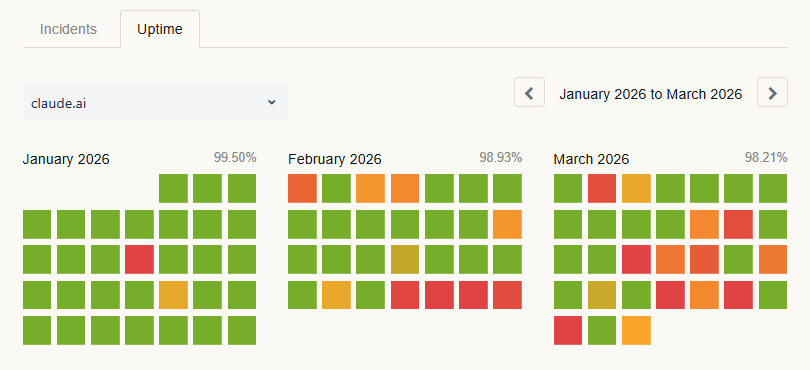
Oh, I see.
Not content with simply facing these ongoing bandwidth issues, Anthropic also quietly scored several own goals.
March 4: Claude Code’s default reasoning effort was lowered from ”high“ to “medium,” leading to a performance drop that power users instantly noticed.
March 26: A new bug made Claude "forget” prior turns in a conversation, which is less than ideal if you prefer working with chatbots that don’t have amnesia.
It certainly didn’t help that Anthropic wouldn’t acknowledge or address this until almost two months later in an April 23 postmortem.
Finally, Claude’s usage limits are way stricter than ChatGPT’s, especially on free plans. This was apparently not something the ex-ChatGPT crowd was prepared for:

It looked like the honeymoon was over before it truly began.
But not to worry: All Anthropic needed was a shiny new model, and all would be forgiven.
Cue dark foreshadowing music.
April 2026: “Gaslightus-4.7”
Anthropic’s technical challenges continued well into April:
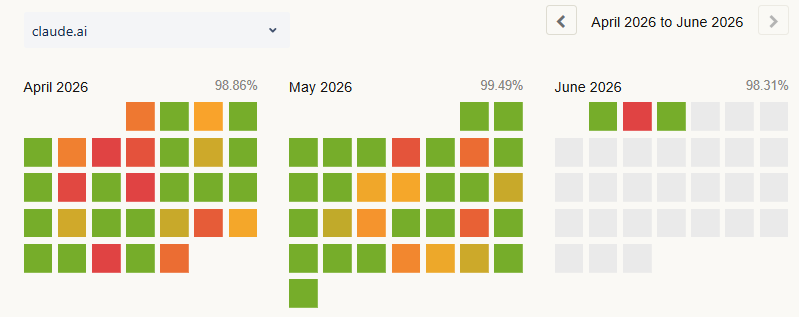
On forums like Reddit, the emerging mood could be loosely summarized as “Stop constantly shipping new goddamn features and just fix the goddamn basics, bro.”
Then, on April 16, Anthropic proudly released a brand new model: Opus 4.7.
Anthropic called it a “notable improvement on Opus 4.6 in advanced software engineering, with particular gains on the most difficult task.”
Users called it “a genuine regression,” “a serious regression,” “legendarily bad,” and—ominously—“Anthropic’s downfall.”
One of the posts referred to Opus 4.7 as “Gaslightus-4.7” because it tended to keep denying its own errors even when the user provided clear proof.
The name stuck because people felt it mirrored Anthropic’s own behavior. The company, faced with increasing reports of degraded performance, chose to play the “I know you are, but what am I?” card:
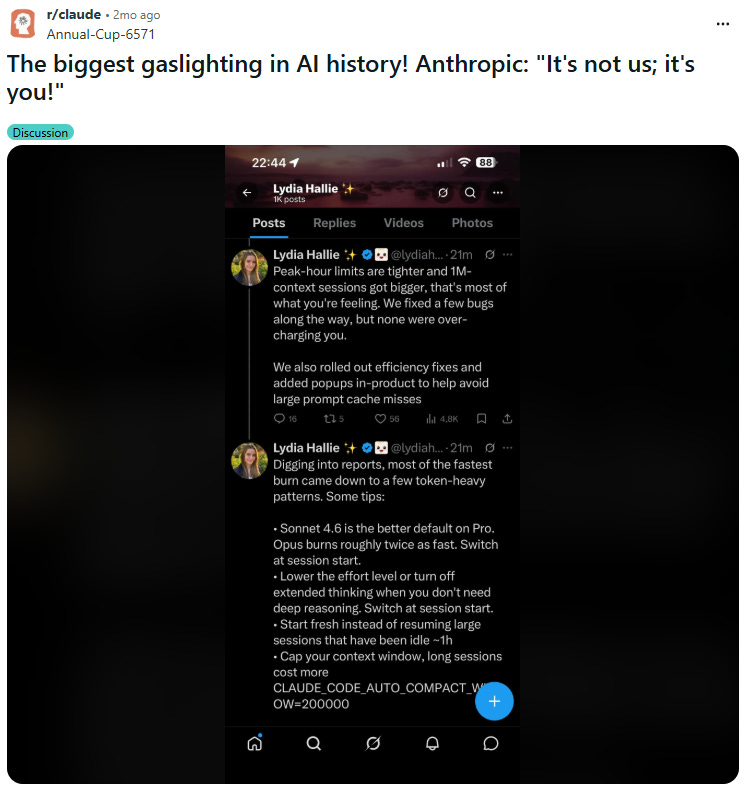
To add fuel to the fire, Anthropic shipped Opus 4.7 with a new tokenizer that effectively bumped usage costs by 20-30%.
It was around the same time that I started running into session limits more quickly and brought in Codex to work alongside Claude Code.
But Anthropic wasn’t quite done spraying bullets directly at its own feet.
On April 21, someone pointed out that Anthropic no longer listed “Claude Code” as a Pro plan feature on its pricing page. Seeing how Claude Code was a major reason so many people (including me) had a paid plan in the first place, this did not go over well at all.
Anthropic instantly backtracked, returned the old pricing page, and claimed it was just a small test on a subset of new users:


But all that did was feed the already growing “gaslighting” narrative.
After all the backlash grew into near-outrage, Anthropic reluctantly published the now-infamous post-mortem about all the performance issues, resulting in this delicious headline in The Register:

Anthropic should give masterclasses on rapidly squandering massive public goodwill.
But maybe not all was lost?
May-June 2026: “More compute, less goodwill”
On May 6, Anthropic got some much-needed help from an unlikely source: Elon Musk’s SpaceX and its vast compute capacity. Thanks to this new deal, Anthropic could stabilize its uptime stats and raise rate limits for all paid users.
And on May 28, Anthropic released its latest model: Opus 4.8, specifically to address many of Opus 4.7’s blind spots.
But early reports from real-world users aren’t rosy. The short of it is that most are planning to stick to Opus 4.6 until Anthropic pries it from their cold, dead hands.
Visit any Anthropic-related subreddit, and you’ll find post after post complaining about general performance issues and Opus 4.8 in particular.
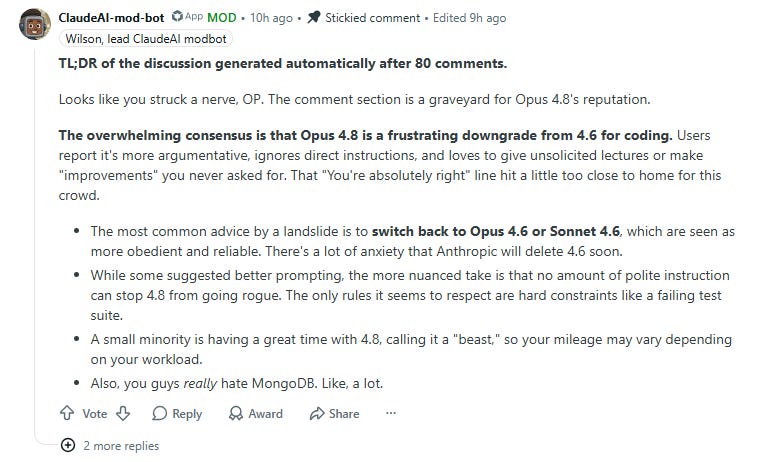
But that’s just anecdotal user reports, right?
Well, not exactly: While Anthropic reported better performance on handpicked benchmarks, several independent benchmarks hint at the real situation being a mixed bag at best.
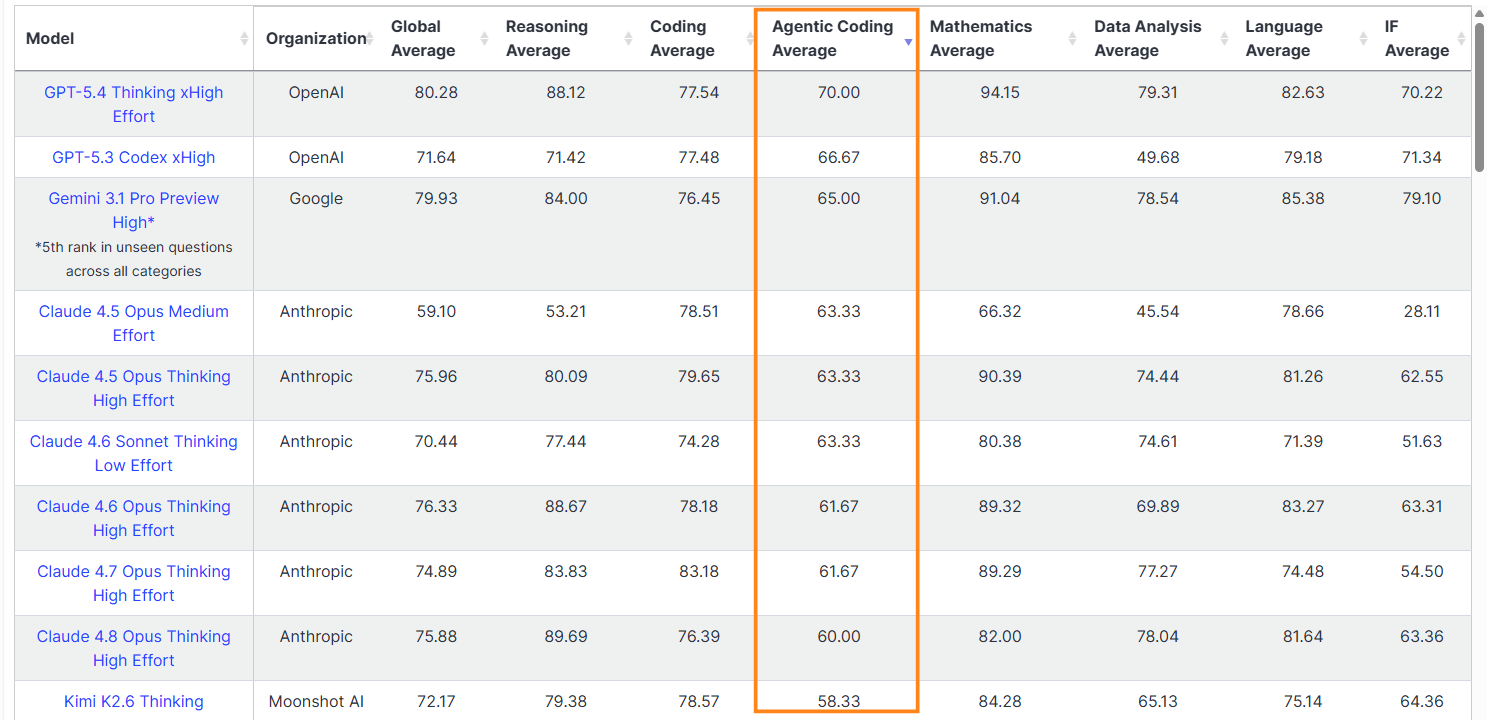
LiveBench ranks Opus 4.6 (and even Sonnet 4.6) above both Opus 4.7 and 4.8 on agentic coding:
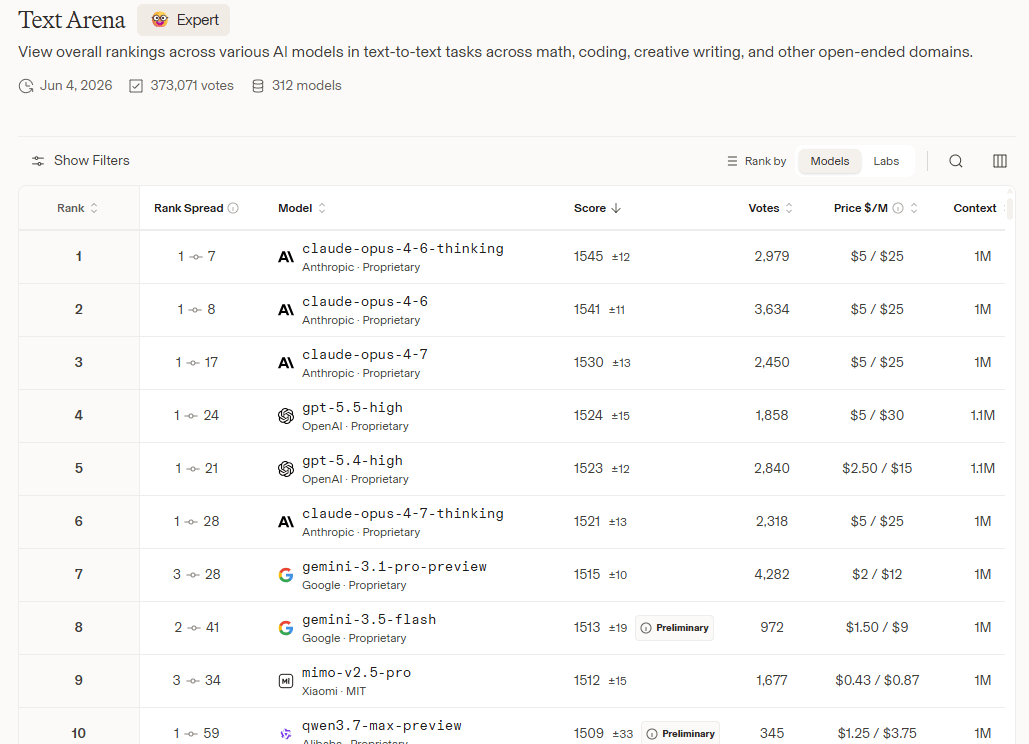
Arena has Opus 4.6 above Opus 4.7 on “Expert” text-to-text tasks (Opus 4.8 not ranked yet):
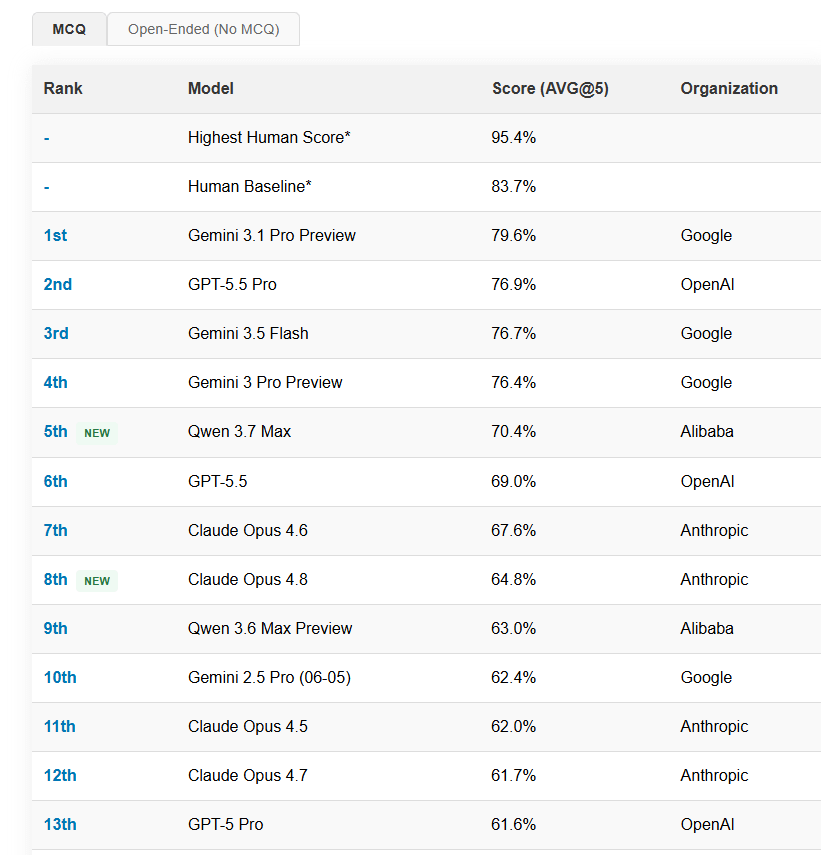
And SimpleBench puts Opus 4.6 in the lead out of all Opus models:
It almost feels like Anthropic is rushing model updates out the door to win back public sentiment, but it’s not quite getting the slam dunk it needs.
Now what?
On June 1, Anthropic submitted preliminary IPO paperwork to the SEC.
The company is currently valued at just under one trillion dollars.
On most metrics that matter to investors, Anthropic is doing just fine.
But if public “vibes” were a metric, they’d tell a different story.
The narrative playing out right now shows that an initial burst of goodwill isn’t enough to compensate for uptime issues, poor PR moves, and subpar product launches.
For Anthropic’s sake, we should hope it wins back the public’s favor and its status page starts logging fewer daily incidents than the screenshot in my intro.
Because you can’t IPO your way out of performance issues and eroding trust.
Thanks for reading!
If you enjoy my scribbles, here’s how you can help:
❤️Like this post if it resonates with you.
🔄Share it to help others discover this newsletter.
🗣️Comment below—I love hearing your opinions.
Why Try AI is a passion project, and I’m grateful to those who help keep it going. If you’d like to support me and unlock cool perks, consider a paid subscription:
Note to self: Find a less insane analogy to replace this unhinged placeholder one before publishing this post. Also, delete this footnote. (Also, stop writing reminders to yourself in footnotes; people can see them. Duh.)
This statement was brought to you by Tautology Inc. Tautology Inc.: When you want to say the same thing using different words or repeat an idea in a paraphrased manner.
I would read Footnote 1 as a whole piece
I'm not married to any particular model but the constant engagement farming at the the *end of every Claude response* makes me hate them
I don't remember Claude doing that as much before